Great article via Love Never Stops

Photo by juan mendez on Pexels.com
May 16, 2018
January 14, 2018
If your comments are partisan political statements and off topic they will be deleted (You have been warned)
Jesus delivered his inaugural public sermon in a society where the Roman -Greco influences were greater than the values that the Hebrew people learned from the Hebrew Scriptures. There was a constant political struggle between the teachings of the faith community vs the values of a secular empire-minded society. 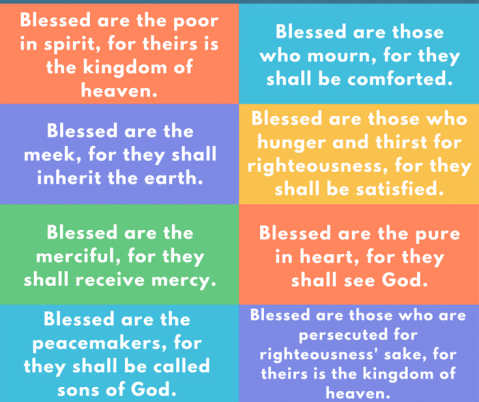 Many of Jesus’s teachings challenged the religious leaders to embrace God’s principles vs the expedient political positions. Theses 8 Beatitudes speak directly values that God embraces in all human beings.
I do not know the history but I would like to imagine that these Beatitudes was the backdrop for Emma Lazarus who wrote the sonnet “The New Colossus” to raise money for the Statue of Liberty. In the sonnet, we find these words,
“Give me your tired, your poor, Your huddled masses yearning to breathe free, The wretched refuse of your teeming shore. Send these, the homeless, tempest-tossed to me, I lift my lamp beside the golden door!”
The clarion call as a disciple of Jesus Christ is to be welcoming of the outsider, inviting to the outcast and hospitable to the foreigner. As Jesus was talking to the other sunkissed brothers and sisters of the first century we see the embrace of all people regardless of race, class, previous religious experience.
As disciples of Jesus Christ, we are called to be welcoming of all. Some people have suggested that we need to be concerned of “terrorist” sneaking into the country.
Since when do the people of God make decisions and operate by fear. Fear about the “other people” is a tool that secular political communicators have used to cause division. Some Christians have embraced this principle over the scriptures that teach us in 2 Timothy 1:7
”For God has not given us a spirit of fear, but of power and of love and of a sound mind.”
Bad things can happen to any of us at any time. My trust is not in a government wall of protection but in God that I will be where I am supposed to be doing the will of God and if in that moment I am to die in God’s service I will also be with God in eternity. While we are addressing the foreign terrorist we must also confront the rise of domestic terrorism and many times the underlying mental health issues that provoke their behavior.
This brings me to the specific comments that the President made concerning Hattians and Africans. Racism is America’s original sin. America’s greatest moral failing is the lack of repentance, reconciliation, and restoration of the original sin. The effects of systemic racism impact every area of our society today from education to economics, to housing, to employment, to health care and every social institution in between. America has attempted to legislate inclusion, the valuing of diversity and move toward a post racial society. The reality there many people who still believe that there is superiority or inferiority of an individual based on the color of their skin. I agree with the New York Times opinion editorial by David Leonhardt.
“No one except Trump can know what Trump’s private thoughts or motivations are. But the public record and his behavior are now abundantly clear. Donald Trump treats black people and Latinos differe
ntly than he treats white people. And that makes him a racist.“ (https://mobile.nytimes.com/2018/01/12/opinion/trump-racist.html)
Mr. Trump’s behavior and words reflect America’s lack of repentance from its original sin. Until the hearts of men and women are transformed from believing that there is no inherent superiority, intellectual advantage or intrinsic privilege based on their “whiteness” we will find ourselves at this point again and again. This behavior is not acceptable by any bible believing disciple of Jesus Christ. Pastors who are controlled more by the power of the political empire than the Scriptures which are our authority will find it difficult to condemn the behavior and words of the President. This is one reason that the church has lost its moral authority. We can’t fight for justice and be a tool of the oppressive empire at the same time. With a collective voice the believers in Jesus Christ must speak up, speak out and no longer be silent. The drum beat for justice must crescendo into a mighty nationwide drumline that sounds a cadence that
e (more…)
December 28, 2017
September 6, 2017
2 When the day of Pentecost had come, they were all together in one place. 2 And suddenly from heaven there came a sound like the rush of a violent wind, and it filled the entire house where they were sitting. 3 Divided tongues, as of fire, appeared among them, and a tongue rested on each of them. 4 All of them were filled with the Holy Spirit and began to speak in other languages, as the Spirit gave them ability.
 and the need to be self-sustaining in 5 years most planters rush through the process. The focus becomes on getting member rather than making disciples.
March 17, 2017
Shortly after I finished Seminary I felt this need to write. Not just once in a while, not because there was a deadline, not just because of something that I read and wanted to share my opinion about but I felt this need to write about everything that I was thinking, experiencing and reflecting on the God’s role in our everyday ordinary lives.
It was exciting to get up every day excited about what I would actually put down on paper. Sometime in the middle of the night I would get up and begin writing. While on one family vacation I filled an entire journal of devotions for family members in the Thomas, Dobbins, Shegog, Chaney tribe.There was never an expectation of publishing but a desire to be inspiring to my family. It was a driving passion for my daily journey at that time.
As a result of the burning passion write at that time in my life I have journals, yellow pad s and notes better now in folders and notebooks all over my office. As email, projects escalated this joy for writing diminished and even experienced a crash and burn.
For the last few months I’ve been attempting to rekindle that fever and that passion that I had 20 years ago so that I can finish a current writing project. I have gotten up early and starred at my computer. I have read relevant books and even pulled out a couple of the old yellow pads and studied the lines as a possible way to reignite process of thoughts landing on paper. Reading my past journals didn’t help much because my thinking has evolved. (This happens with age). I was about to give up and then it snowed on Tuesday.
I watched children in the sub division playing in the snow. Snowball fights, sledding down the hill, building snow architecture and enjoying each minute of it. I saw men in my neighborhood eager to show off their new snow blower toys and the more traditional among us out with shovels cleaning the sidewalks and driveways. This excitement and community bonding event was in full effect and faded as the snow began to melt Thursday.
This snow event helped me to realize that my attempt to rekindle my old passion for writing is a futile attempt. My new goal is the find a greater passion and a new excitement about writing. For this season I will get excited about the project that is before me and focus on how God can give me joy in this season before moving to the next season. I’m not sure where this journey is will leave me but I’m inviting you all to take the journey with me.
Ecclesiastes 3Common English Bible (CEB)
A season for everything
3 There’s a season for everything
and a time for every matter under the heavens:
2 a time for giving birth and a time for dying,
a time for planting and a time for uprooting what was planted,
3 a time for killing and a time for healing,
a time for tearing down and a time for building up,
4 a time for crying and a time for laughing,
a time for mourning and a time for dancing,
5 a time for throwing stones and a time for gathering stones,
a time for embracing and a time for avoiding embraces,
6 a time for searching and a time for losing,
a time for keeping and a time for throwing away,
7 a time for tearing and a time for repairing,
a time for keeping silent and a time for speaking,
8 a time for loving and a time for hating,
a time for war and a time for peace.
March 9, 2017
Celebrating International Women’s Day 2017
International Women’s Day took me by surprise. I was not paying attention to the preparations women all around me were making to engage in community service, provide child care and support women who would have to work on Wednesday March 8, 2017.
 As a male, I acknowledge that we should all be paying attention to the women in our lives and to the awesome contributions that they are making in all areas and professions. The reality is that many times I take it for granted until somebody points out the extreme multitasking and momentous achievements that the women in my life are making daily.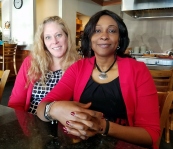
I look at the history of my family and remember that Jeanette A. Thomas, my grandmother was a phenomenal woman, She raised seven children in Cincinnati, Ohio after moving from File, Virginia. She set the example of educational achievement by attaining a Master’s in Education from the University of Cincinnati in 1959. She instilled this passion for education in each of her children who all achieved a Masters in different fields and three achieved doctorates. That passion and value of strong women on International Women’s Day is expressed by her granddaughter Dr. Marya l. Shegog PH.D MPH, “International Women’s Day is a day to honor the very essence of women, not merely for their accomplishments but for their existence and willingness to stand without waiver for love and passion.”
The full expression of this experience is not limited to my family. Virginia Sowell in Atlanta reflects and says, ”She’s not just somebody’s wife, daughter, or mother. She is someone! International Women’s Day is about bringing to the forefront women’s contributions throughout history that have been minimized. I am grateful for the strides to recognize marginalized people and that we are trying to learn more. Today we lift up women as humans, as equals, not as simply support to a man.”

In Maryland, my good friend Christine Kumar works faithfully in the church and reflects this way, “International women’s Day is a celebration of how our female ancestors bravely paved the way for us to be who God has called us to be. We move forward exercising our rights and building women from all walks of life up in this journey.”
God has created women not to be limited to the stereotypical narrow roles of being housekeepers, caretakers and rearing children but women all across the world are designed by God to be leaders, engineers, preachers, musicians, business owners, CEOs, technology innovators, philanthropist and so much more. We all celebrate what God is doing in and through the women all around us not just today but everyday.
Marya L Shegog Ph.D MPH – Director of a Health programs, The Lincy Institute, School of Community Health Sciences, Editor of The Journal of Health Disparities Research and Practice, University of Nevada, Las Vegas
Virginia Sowell – Director of Communications, Oak Grove United Methodist Church, Decatur GA
Christine Kumar – Business Administrator, Baltimore Metropolitan District, Baltimore-Washington Conference of the United Methodist Church
January 3, 2017
I was listening to the lectionary scripture {Matthew 2:1-12} being read yesterday and began to reflect on the many times that I had listened to the story of the three kings and never asked a critical question. What are the lessons that we learn from the Magi that visited Jesus which will help me be a better disciple of Jesus?
They were full of faith – They had followed other stars that led them to other kings and they were confident in this new star also leading them to a new king. This was not a spiritual journey for them but it was about honoring the office and person. This required great faith. To grow as a disciple means that you are growing in your faith. To become mature would indicate that you walk daily by faith. This is a place of surrender. Fai th is not about you and what you can acquire but faith is about God working in you so that you can trust God completely.
The journey was a part of the process – Many times as people are maturing in Christ there are complaints about meeting the class schedules, driving across town for to pray with a group, meeting a new believer at times that are not convenient to you and questions about “Why isn’t Sunday morning enough?” The reality is that if we are going to grow as disciples of Christ we will have to learn that the process is not linear and the process will not be the same for everybody.
The magi were clear that the goal was to see the new born king even if it was 2 years after his actual birth. If our goal is to become mature committed disciples, we have to expect some challenges during the journey but never give up on the goal
They were generous – They brought their valuables to a future king. They had no previous relationship or allegiance to the future king and they gave freely. This is especially interesting since they had to barter for their needs during the journey.
As we grow in our discipleship may we all be full of faith, be comfortable with the journey and be generous.
December 29, 2016
Excellent blog!
 As we near the end of 2016 and the beginning of 2017 – I’ve mentioned a focus for the new year. That focus is reaching the next generation. Our church is mainly made up of aging saints. The medium age of Laurel is 35 and our medium age at First Church is probably closer to 55 or higher. We have an awesome church – but – if we do not reach the next generation with Christ – in 10-30 years there will not be a First Church. I say that not to scare us but to bring into focus what the problem is as we make plans to reach the next generation.
Many churches focus…
View original post 664 more words
March 28, 2016
Some of my fond early memories are connected to times when I was able to spend holidays with my extended family. Jeanette and Otto Thomas had seven children that nicknamed themselves the Fantastic 7. Along with their 18 children it was always a lot of fun.
Holidays were special already but when we meet at grandma’s house dinner time was a major production. There is always lots of food, lots of laughter and lots of conversation. Needless to say with large families there were times when everybody did not agree on a specific topic or opinion and the volume level and intensity of the conversation would increase as the evening progressed but inevitably grandma would walk in the room and state her position and for the rest of the evening the focus would be on what activities we would participate in. Grandma Thomas had a way of ending the confusion and redirecting everyone’s attention to what was really important, being with each other. She had a unique way of not telling everybody that they were wrong but affirming her position and bringing everyone together.
As we live into this season of celebrating the resurrection of Jesus Christ we are reminded that there is one way to God and that is through Jesus Christ. We are reminded that we can respect other religions, but the sacrifice of Jesus on the cross is what makes it possible for me to have a relationship with God almighty.” I have no need to attack what others believe because I am clearly focused on the reality that my salvation is firmly rooted in the resurrection of the only man who was divine and human and lived on this earth with no sin.”
Challenge
As disciples of Jesus Christ how will you focus people on the essentials of the faith. God’s sacrificial love for sending Jesus. Jesus’ sacrifice on the cross for our sins and the resurrection that gives us access to God.
Prayer
Keep us on what really matters.
February 11, 2016
23 Examine me, God! Look at my heart!
Put me to the test! Know my anxious thoughts!
24 Look to see if there is any idolatrous way[f] in me,
then lead me on the eternal path!Psalms 139
This entire season of Lent is a time of reflection, repentance and renewal. During the next 40 days we will have an opportunity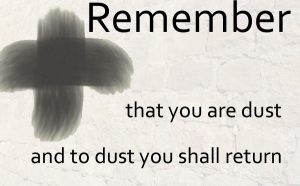 to reflect on our behavior, spiritual disciplines and the motives for our actions. We get to repent of the sins of omission and commission. This makes us vulnerable but without the vulnerability we can’t experience humility. It is in our humility that we acknowledge our need for cleansing from God and that in this earthly journey we can’t do this without God.
But during this season of lent we have the opportunity to reflect on our shortcomings repent and be reconciled back to God.


 Making Disciples in an Emerging Culture